Feeding Horses When the Drought Breaks: Returning to Pasture Safely
The rain has finally arrived.
But that doesn’t mean your drought feeding plan should stop overnight.
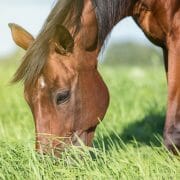
After months of dry conditions, it can be tempting to open the gates and let your horse loose on the first flush of green pasture. However, this can create problems.
For some horses, a sudden change in diet can increase the risk of colic and laminitis. Instead, the end of a drought should be treated as a transition period — and how you manage that transition matters.
Rain doesn’t instantly create a ready-to-graze pasture
When rain finally arrives, pasture can change quickly, with green pick appearing almost immediately.
But the first green shoots aren’t necessarily a sign that pasture is ready to support unrestricted grazing.
Giving pasture time to recover is important for its longer-term productivity. Grazing too early can deplete the remaining root reserves of drought-stressed plants and, in severe cases, cause plants to die.
Don’t turn horses straight onto lush pasture
A horse that has spent weeks or months eating hay and other supplementary forage has a very different diet from a horse grazing actively growing pasture.
Suddenly increasing pasture intake can dramatically change the amount of energy, protein, sugar and water entering the diet. It can also change the amount of fibre being consumed and the rate at which feed passes through the digestive tract.
These changes make the transition back to pasture a high-risk period for colic and laminitis. A slow transition gives your horse — and, importantly, the microbes in the gut — time to adapt.
How quickly you can increase grazing time depends on the pasture, the individual horse and how much pasture is available.
A practical approach is to:
- Continue feeding hay.
- Start with short periods of grazing on recovered pasture, such as 30–60 minutes per day.
- Gradually increase grazing time by 30–60-minute increments.
- Continue offering hay, although intake may reduce as pasture intake increases.
- Monitor body condition throughout the transition.
There is no single number of days that will work for every horse when transitioning back to unrestricted pasture access.
The aim is to gradually increase pasture intake while monitoring your horse’s health and body condition, rather than suddenly replacing the entire diet and risking problems such as colic or laminitis.
Keep watching body condition
The end of a drought can bring a surprising change in body condition, and some horses will regain weight quickly once pasture becomes available.
This can be particularly important for easy keepers and horses that have previously struggled to maintain a healthy weight.
Don’t assume that because a horse lost weight during the drought, unrestricted access to fresh pasture is now appropriate.
Continue monitoring body condition and adjust the diet as needed. Some horses may still need supplementary forage or additional calories.
Be particularly careful with horses at risk of laminitis
Rapidly growing pasture can be high in non-structural carbohydrates (NSC), although pasture sugar and starch can vary considerably with plant species, maturity and environmental conditions.
This deserves particular attention in horses that are:
- Prone to laminitis
- Insulin dysregulated
- Overweight
- Affected by PPID
A drought ending doesn’t remove these dietary risks.
If your horse requires a low-NSC diet, manage pasture access carefully and consider pasture or forage testing where appropriate.
It’s also important to avoid assuming that the first flush of green pasture is suitable for unrestricted grazing. Allowing pasture time to recover can help both the plants and the horse.
Continue feeding hay while pasture recovers
It can be tempting to stop feeding hay as soon as grass appears.
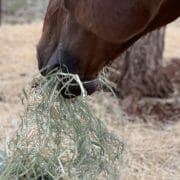
Instead, use hay to help control the rate at which pasture becomes your horse’s main forage source. This also gives pasture plants time to establish before they are subjected to heavy grazing pressure.
For many pasture species, allowing plants to reach an appropriate stage of growth before grazing supports pasture recovery and provides a better balance of nutrients and fibre for horses.
As pasture availability increases, gradually reduce supplementary hay according to how much pasture your horse is consuming.
Horses will generally favour pasture over hay when both are available, so you can use changes in hay intake as one guide to how much pasture they are consuming. However, always ensure adequate forage remains available, particularly during the transition period.
You may need to continue feeding hay for several months after the drought has finished to allow pasture time to recover.
Watch for weeds
Be aware of weeds that weren’t present in the pasture before the drought but may now appear in your paddock.
These may include toxic plants or simply colonising plants — the first plants to establish when the ground has been bare.
Examples include capeweed (Arctotheca calendula) and false dandelion (Hypochaeris radicata).
If these weeds are present in large enough quantities, horses may consume significant amounts of them, potentially causing health problems or contributing to mineral imbalances.
Reassess the whole diet
Your drought diet may have contained a combination of grass hay, straw, lucerne hay, other fibre feeds, commercial feed and supplements.
As pasture intake increases, the contribution from those feeds to the overall diet will change.
A diet that was appropriate when hay provided most of the forage may no longer be appropriate when pasture becomes a significant part of the diet.
For example, a horse may no longer need the same amount of energy-dense feed.
The vitamin and mineral supplement may also need to change because pasture is now supplying nutrients that weren’t previously coming from hay.
This is a good time to reassess the whole diet rather than simply removing feeds as pasture becomes available.
Don’t forget about water
As horses move from dry lots or sacrifice paddocks back onto pasture, their water source and intake may change.
For example, your horse may have been drinking delivered town water while in a dry lot or sacrifice paddock and then have access to bore water when returned to pasture.
Make sure the new water source is clean, palatable and readily available. Monitor your horse’s water intake when there is a change in water source and, where possible, provide a familiar water source during the transition.
Horses should always have access to unlimited, clean, palatable water.
The takeaways
When the drought breaks, don’t switch from drought feeding to unlimited pasture overnight.
- Give recovering pasture time to establish and gradually increase grazing.
- Continue monitoring body condition, particularly in easy keepers and horses at risk of laminitis.
- Continue feeding hay while pasture availability increases and gradually adjust the amount according to pasture intake.
- Reassess the whole diet as pasture becomes a larger part of the diet.
- Pay particular attention to horses that need a low-NSC diet.
- Watch for weeds that may have appeared during pasture recovery.
- Make sure horses have access to clean, palatable water.
Rain may end the drought — but good pasture management and careful dietary transitions help make sure your horse comes through it healthy.
FeedXL members — now’s the perfect time to double-check your horse’s diet.
Log in and review your forage and fibre balance »
Not using FeedXL yet?
Join today to start building scientifically balanced diets for your horse »